AI on Ice: How Robotics and Algorithms are Transforming Professional Curling
AI-powered robots like 'Curly' and VR training systems are revolutionizing curling. While enhancing elite performance and accessibility, these innovations raise ethical questions about the sport's traditional values.
IEEE Range is the flagship publication of the IEEE– the globe’s biggest specialist organization dedicated to engineering and used scientific researches. Our infographics, write-ups, and video clips notify our readers about advancements in engineering, scientific research, and technology.
“We go to a point now where practically everything that we made use of to stand up as distinctly human is now being eroded by innovation– and we really feel a loss,” states Jason Millar, that runs the Canadian Robotics and AI Ethical Layout Lab at the University of Ottawa.
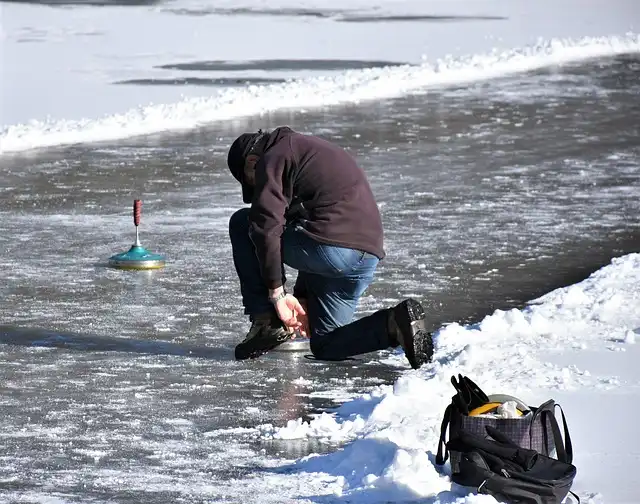
For her component, Zacharias– who contended at four Canadian females’s curling championships between 2021 and 2024– says she never ever as soon as exercised against a robot. She has actually trained with a rock launcher: a mechanical shipment system that fires rocks at precisely calibrated rotations and speeds, over and over.
According to Mick Lizmore, head coach of Canada’s National Wheelchair Curling Program, his group has actually made use of the VR to assist picture the venue where they will certainly be completing and for group tactical training, even when they can’t satisfy together in person. Beyond developing elite preparation, Dornstauder says, the same tool should help broaden accessibility to wheelchair curling for individuals with impairments that encounter flexibility obstacles or limited ice schedule.
The Emergence of Autonomous Robots
With its six-legged stride for secure grip and versatility on the ice, the robot can pivot at the “hack,” the rubber grip curling irons make use of to launch their delivery. From there, the hexapod established its angle, started, and moved on a skateboard-like undercarriage prior to releasing the rock, imparting competition-level spin.
The Curly robotic initially made waves in 2018 when, ahead of that year’s Paralympic Winter Games in Pyeongchang, engineers at Korea University in Seoul revealed the AI-powered tool– or, instead, 2 coordinated devices, a set of “skip” and “thrower” units, made to read the ice and deliver stones.
Curling has gone to this kind of crossroads before. A decade back, the sweeping-fabric dispute called “Broomgate” activated allegations of technical doping, a conflict that tore at the heart the sporting activity’s values of trust and bonhomie.
Elie Dolgin is a science author focusing on biomedical study and medicine exploration. After a PhD spent examining the population genetics of nematodes, he switched worms for words– getting in journalism as an editor at The Researcher, Nature Medicine, and STAT. Now a freelancer, Elie is a constant contributor to New Researcher, Nature, IEEE Range, and more.
In the meantime, the stones still leave human hands– hands with the ability of radiance, reaction, and the occasional double-touch– and the final call still rests with the skip in the house. Yet the algorithms are bordering better to the button.
Revolutionizing Training with Virtual Reality
Some of these robots, such a “Curly,” have already toppled elite human opponents in head-to-head competitions. Others, engineered either to replicate the biomechanics of human shot delivery or to terminate stones constantly with repeatable speed and rotation, are changing the sporting activity by dissecting strategy and method with a level of rigor no train with a stopwatch can match.
The setup goes down athletes right into an immersive curling rink by means of a Meta Quest headset, where they can look down and see online renderings of their legs, wheelchair, tossing stick, rocks and the ice surface area underneath them.
The Globe Curling Federation reacted by securing down on brush products, butAI currently positions a wider obstacle. It is not simply a much better mop, but a decision engine, with the ability of changing authority from a gamer’s judgment in the “house” to a model running in the cloud.
That capability was put to the test in a collection of mini-games against top-ranked Korean professional athletes. As reported in the journal Science Robotics, Curly started slow-moving, going down the opening match as it calibrated to the live ice. Yet it after that took place to win the next three contests, demonstrating what its developers called “human-level efficiency” under real-world conditions.
Driven by a physics-based simulator and a flexible deep reinforcement-learning structure, the robot really did not just replay pre-programmed shots. It picked up from its very own misses out on, upgraded its goal based upon the distance spaces between designated and real stone positions, and factored in the collective wear of pebbled ice as a match unravelled.
The Human-Machine Performance Gap
Geared up with LiDAR and video cameras, the robotic scanned the sheet to map stone placements and fed those data right into software program that computed crash courses and resolved for the precise release parameters required to carry out a chosen technique.
At the time of their data cut-off, in 2021, they discovered almost two lots published researches concerning robotics, AI, and emerging technology in the sport.But as Zacharias points out, one of the most sophisticated devices forming elite play frequently never ever show up in scholastic journals, established behind shut doors and carefully safeguarded as competitive keys.
As reported in the journal Scientific research Robotics, Curly began slow, going down the opening suit as it adjusted to the live ice. By standardizing the toss, the device enables professional athletes to isolate exactly how different sweeping strategies, brush-head materials, or ice temperature levels change a rock’s path, explains Paulley. Elie Dolgin is a science author specializing in biomedical research study and drug exploration. Now a consultant, Elie is a regular factor to New Scientist, Nature, IEEE Spectrum, and more.
Sustained by investments from federal governments and sporting bodies all over the world, the search of an one-upmanship has actually risen right into a data-driven push for low gains in advance of each Olympic cycle. “They’re attempting like insane to raise their nationwide team programs,” Paulley states, “and they’re doing it in every means possible.” By the time medals are given out in Cortina d’Ampezzo this weekend, the imprint of this full-throttle technology offensive can be etched into every sheet of ice.
Sign up with the globe’s largest expert company devoted to engineering and applied sciences and obtain access to
every one of Range’s short articles, archives, PDF downloads, and various other benefits.
Learn more regarding IEEE →
Global Competition and Tech Investments
The program brings together university designers, showing off firms, and elite athletes to prototype delivery robotics and sweep-assist makers, in addition to AI approach engines, instrumented “smart stones,” and rock-launcher systems for regulated training.
It’s a possibility that agitates some ethicists and athletes, that fret about what obtains lost as optimization tightens its grasp on a sport long governed by the so-called Spirit of Curling, an unformulated code of fairness, integrity, and regard.
Produce an account to gain access to more content and features on
IEEE Range
, consisting of the capacity to conserve short articles to check out later, download Range Collections, and participate in
discussions with editors and readers. For even more special web content and functions, take into consideration
Joining IEEE
.
A challenged double-touch– whether a curling iron had actually cleaned a moving rock twice– stimulated protests, profanity-laced exchanges, and heated dispute about sportsmanship. In a game that prides itself on mutual count on and the idea of competition as a shared examination of skill, also the pointer of incongruity can ripple much beyond a single end.
The technology push isn’t confined to Olympic play either. At the Paralympics following month, the Canadian national wheelchair curling team will certainly be coming topped with training sessions inside a full digital replica of the Cortina Curling Olympic Arena, thanks to a VR system established by mechanical designer Jennifer Dornstauder and her trainees at Red Deer Polytechnic in Alberta.
Ethical Boundaries and the Spirit of Curling
By standardizing the throw, the device enables athletes to isolate just how different sweeping strategies, brush-head textiles, or ice temperature levels modify a stone’s course, explains Paulley. “It implies you can run repetitive experiments in order to evaluate the influence of various variables,” he states. “And in curling, there are a great deal of variables.”.
There are no Roomba-like equipments flanking the stone, hysterically brushing to extend its travel or hold its line. When released, the robotic’s shot is fate, unblemished by the vigorous, broom-flailing choreography that so frequently identifies whether a rock attacks the button or drifts broad.
Many of the modern technologies going into curling are, in several means, benign– devices for analysis, access, and step-by-step improvement as opposed to wholesale disruption. A rock launcher standardizes method. A virtual reality headset prolongs rehearsal beyond the rink. A technique engine supplies likelihoods, not ultimatums.
As formulas start recommending shots, the shapes of fair play blur. Regulators and instructors alike are facing where to fix a limit. And as leading curlers lean more into AI and robotic systems, some are afraid the loss of something basic: the peaceful, hard-earned feeling for ice that divides veterans from novices.
And as leading curling irons lean more into AI and robot systems, some are afraid the loss of something fundamental: the quiet, hard-earned feeling for ice that divides veterans from amateurs.
Balancing Innovation with Tradition
“The core goal is exclusive efficiency: improving decision-making and the quality of training to ensure that Japan can strengthen its competition in international competition,” claims Yoshinari Takegawa, an info scientist at the Future College Hakodate who is co-leading the project.
AI-powered sparring makers tuned to mimic a competing team’s tendencies, and hence with the ability of playing out fully simulated preparatory matches, remain a dream. National curling programs operate tight budget plans, restricting just how far and how rapid innovation can go. And even well-funded federations have to stabilize software and robotics versus travel, mentoring, and ice time.
Sign up with the world’s biggest expert company devoted to design and used scientific researches and obtain access to
this e-book plus every one of
IEEE Spectrum’s.
posts, archives, PDF downloads, and various other benefits.
Discover more about IEEE →.
2 curling technology
3 IEEE Spectrum robotics
4 machine learning
5 sports innovation
6 virtual reality training
« Windows 11 Update: New Emoji 16.0, Webcam Controls, and System FeaturesAI’s Disruptive Impact on Tech: Chip Shortages, Job Market, & Public Backlash »