
AI Data Centers: US Nuclear Safety Rules Eased Amid Tech Push
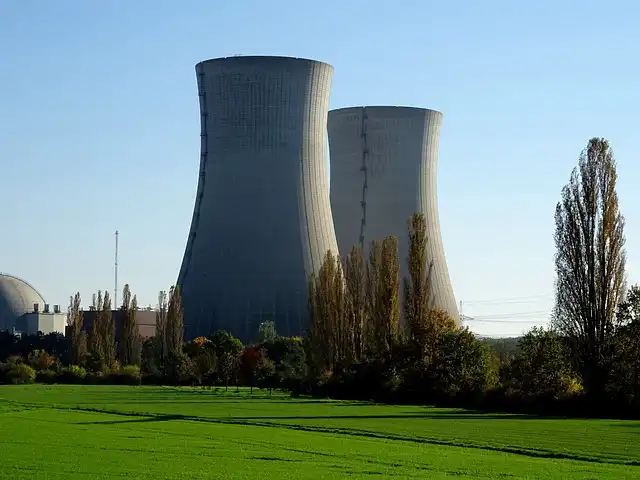
The US DOE has reduced nuclear safety oversight for SMRs to support AI data center power needs, sparking debate over environmental risks and the removal of the ALARA standard for worker protection.
The limit for accident investigations has also been altered. NPR mentioned, “the new order increases bench for a main crash examination from cases that expose workers to 2 times the legal dose of contaminated material, to those at 4 times.”
Gogia directed out, “this is not a threat that rests at the grid side. It moves all the means into boardrooms, danger registers, and company continuity plans.
Jackson claimed that there is already a lot of social pushback against the growth of information centers for AI. There are environmental worries regarding using water, the amount of power to be consumed, and the possible emissions that go along with it. Funding nuclear power sources, he stated, “is expected to be a method [for hyperscalers] to alleviate those reputational threats, because they don’t add to carbon emissions. If the nuclear power plant adversely affects employee or person safety, or infects the atmosphere, that’s a problem.”
Industry Experts Question Rule Rewording
Matt Kimball, VP and primary expert with Moor Insights & Approach, claimed that he does not think that anyone suches as to see regulations and guidelines reworded or edited behind closed doors. And it is a little tough to fully comment on the regulation adjustments implemented, as they show up significant.”
The record additionally noted that the project is being “backed by billions in private equity, financial backing and public financial investments. Backers of the activators, consisting of tech giants Amazon, Google and Meta, have said they desire the reactors to one day supply cheap, reputable power for expert system.”
Enterprise leaders that are evaluating SMR-backed power remedies, he claimed, “need to now accept that the activator sustaining their AI collection might be governed by inner instructions that are not released, independently examined, or openly challengeable.”
He mentioned,” [, if] I am Google/ Meta/ Amazon, I’m worried concerning this. It’s not that we anticipate these information center sites to host nuclear reactors, so it’s not about the direct threat of a radioactive event. Because they are moneying them, there’s reputational danger if the activators melt down and harm individuals or the atmosphere.”
He claimed,” [it is] now incumbent on CIOs, facilities leaders, and sustainability policemans to recreate that danger scaffolding contractually, procedurally, and operationally or prepare to acquire the repercussions when design intent is eluded by functional uncertainty.”
Meeting the Demand for Gigawatt Data Centers
Finally, he said, “I don’t assume I need to invest a lot of words on verbalizing the value of nuclear to the hyperscale or AI information center. The age of the gigawatt datacenter is upon us, and the standard methods of producing power can’t support this pressing demand. We have to ensure we release power infrastructure, such as SMRs, in an accountable, moral, and safe fashion.”
Further to that, Gogia pointed out that for CIOs and facilities designers, the risks expand well past possible radiation leaks. “What matters much more right away is that system abnormalities– mechanical, thermal, software-related– may not be documented, checked out, or escalated with the diligence one would expect from an NRC-governed center,” he claimed. Power stability comes to be less foreseeable.
Safety rules lowered: Numerous web pages of security rules were cut from the brand-new orders. Greater than 500 pages of paperwork was lowered to a 23-page order, reducing several vital areas to bullet factors.
The DOE Program Driving Security Changes
The US Department of Energy (DoE) program that would see three brand-new experimental business nuclear reactors launched by July 4 is the driver behind the secret rewording of nuclear security and protection standards, claims a record launched Wednesday by NPR.
Historically, nuclear security has been defined not just by design roughness but by split administration, independent oversight, and traceability throughout systems.”
It pointed out, “Getting rid of the basic indicates that new activators can be created with much less concrete protecting, and workers might work longer changes, possibly getting higher dosages of radiation.” That could lower building and construction and operating costs for the new plants.
Sanchit Vir Gogia, chief analyst at Greyhound Study, claimed,” [the DoE’s] silent taking down of foundational nuclear security protocols is not simply a regulatory decision, it’s a wholesale redrafting of exactly how business framework risk will certainly be allocated in the years ahead. Historically, nuclear security has actually been specified not just by engineering roughness yet by split administration, independent oversight, and traceability throughout systems.”
Additionally, he said, SMRs can be air-cooled, which greatly lowers the quantity of water needed. “These are just a couple of instances of exactly how an SMR varies from the large industrial nuclear reactor we think of when we consider nuclear power.”
Brian Jackson, major research director at Info-Tech Study Group, stated, “the only method to look at this from a technology angle is to place yourself in the shoes of the hyperscalers that are straight incentivized to locate means to power their AI information. So they are funding the development of these modular nuclear reactors, and now we listen to that possibly security shortcuts are being required to produce them faster.”
He added, “if these policy adjustments were made to make it possible for an increased path to utilizing little modular activators (SMRs), I can see where perhaps some adjustments were required, or a different set of regulations [ required] around releasing an SMR. It is developed to be much less impactful on the setting when it comes to SMR modern technology. Partially as a result of dimension (substantially much less gas) and partially due to style.”
Advantages and Risks of SMR Technology
Kimball aimed out that while an SMR works on the same concept as a large nuclear plant, using controlled fission to create warm which is after that transformed to power, its style reduces ecological impacts such as groundwater contamination, water use, and the impact in the occasion of failing. He stated, “I don’t believe I need to invest also lots of words on verbalizing the worth of nuclear to the hyperscale or AI information.
Kimball mentioned that while an SMR works on the very same principle as a massive nuclear plant, using controlled fission to generate heat which is after that transformed to electricity, its design lowers ecological effects such as groundwater contamination, water usage, and the effect in case of failing. For instance, he said, the integral activator style in an SMR, with all elements in a solitary vessel, removes outside piping. This means that crashes would be self-contained, minimizing the ecological impact.
NPR kept in mind, “The new orders strip out some assisting concepts of nuclear safety and security, especially an idea known as “As Low As Fairly Attainable” (ALARA), which needs nuclear activator drivers to keep levels of radiation exposure listed below the legal limit whenever they can. The ALARA standard has actually remained in usage for years at both the Department of Power and the Nuclear Regulatory Payment.”
It’s not that we expect these data center sites to host nuclear activators, so it’s not regarding the straight danger of a contaminated event. If the nuclear power plant negatively affects worker or citizen safety and security, or contaminates the atmosphere, that’s a concern.”
Removal of Environmental Protections
Environmental managements removed: “Instead of requiring protection of the environment, the new order suggests ‘lessening’ environmental impacts ‘if useful.'” For example, “radiological activities that have the possible to impact the environment needs to be conducted in a way that secures populations of water animals, earthbound plants, and earthbound pets in regional environments from damaging effects as a result of radiation and radioactive product released from DOE operations” ended up being the watered-down “factor to consider may be provided to decreasing or staying clear of, if useful, possible negative effects to aquatic animals, earthbound plants, and earthbound animals in local ecosystems from radiation and releases of radioactive product, using a graded approach.”
Paul Barker is an independent reporter whose job has appeared in a variety of innovation magazines and online, including IT World Canada, Network Daily News, and Financial Message. He covers subjects varying from cybersecurity concerns and the developing world of side computer to information administration and expert system developments.
The most underappreciated change in this change, Gogia included, “is not what was reduced, however who currently chooses what suffices. The action from independent NRC oversight to inner DOE consent creates a basic imbalance between how venture danger is taken care of and just how activator security is being regulated. In basic terms: the referee currently plays for the home team.”
Instead business need to give ‘consideration’ to ‘minimizing or staying clear of’ radioactive contamination. The requirement to make use of the “finest available innovation” to safeguard water materials was additionally eliminated, and the words “must be” or “may be” were substituted for “restricted” and “should” in the guidelines.
As a result of differences such as this, stated Kimball, “I can see where guidelines generated/strengthened in the post-Three Mile Island period may require to be reviewed for this brand-new nuclear period. However it is truly tough to speak with exactly how ‘loosened’ these policies have actually become, and whether differences between SMRs and large nuclear plants make up the majority of the adjustments reported.”
1 AI Power2 Environment
3 nuclear
4 Safety Regulations
5 Small Modular Reactors
6 Tech Giants
« Reclaim Disk Space: Clean Old Windows Drivers with Driver Store Explorer (RAPR)Master Android Printing and Scanning: A Guide to Mopria and Google Drive »